Classic Cocktails Every Home Bartender Should Master
Introduction
A home bar grows stronger when it starts with a short list of proven classics. These drinks teach balance, technique, and timing without forcing a cabinet full of rare bottles. Each recipe also shows how sugar, citrus, spirit, and dilution shape flavor. Once those patterns become familiar, a home bartender can mix with more control, serve guests with ease, and fix common mistakes before they reach the glass.
Old Fashioned
The Old Fashioned teaches restraint. It uses whiskey, sugar, bitters, and orange oil, with little room to hide weak balance. A standard build is 2 ounces bourbon or rye, 1 sugar cube or 1 teaspoon syrup, and 2 dashes bitters. Stir with ice until chilled, then strain over fresh cubes. The result should taste strong, smooth, and lightly sweet.
Martini
A Martini shows why precision matters. Gin brings structure, while dry vermouth adds lift and herbal depth. A common starting point is 2 1/2 ounces gin and 1/2 ounce vermouth. Stir with ice, then strain into a cold glass. Lemon twist keeps the drink bright, while an olive shifts it savory. Either garnish works if the base remains crisp.
Manhattan
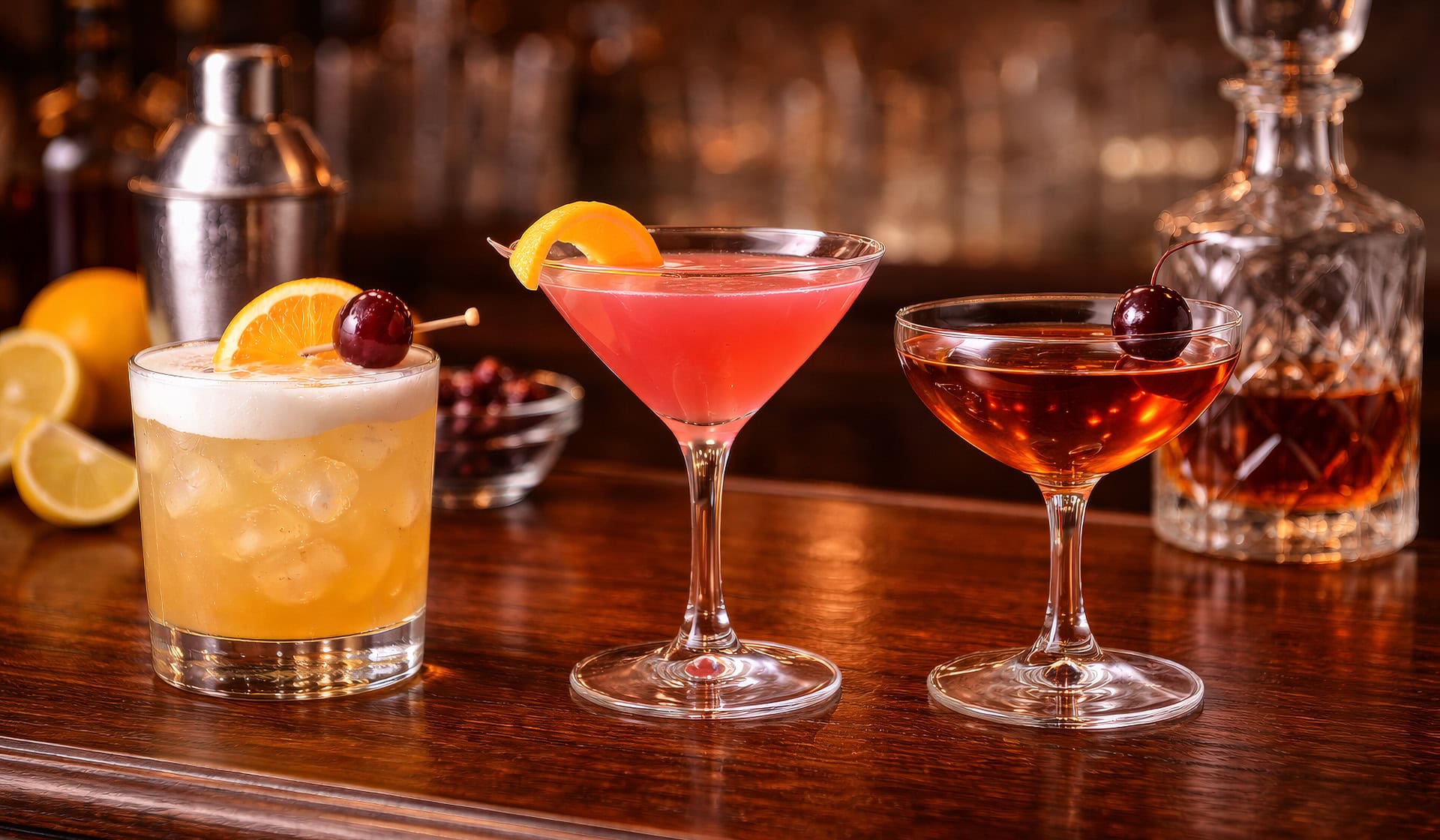
The Manhattan is a close cousin to the Martini, yet it feels warmer and rounder. Rye whiskey pairs well with sweet vermouth and bitters, creating spice, fruit, and depth in one sip. Use 2 ounces rye, 1 ounce vermouth, and 2 dashes bitters. Stir well, strain up, and finish with a cherry. Good dilution softens edges without thinning character.
Daiquiri
A proper Daiquiri is lean, bright, and refreshing. It is far removed from frozen, sugary versions found at many chain spots. The core recipe is 2 ounces white rum, 3/4 ounce lime juice, and 3/4 ounce simple syrup. Shake hard with ice and strain into a coupe. This drink teaches how citrus and sweetness must support, rather than bury, spirit.
Margarita
The Margarita expands the same lesson with tequila and orange liqueur. A dependable ratio is 2 ounces blanco tequila, 1 ounce lime juice, and 3/4 ounce orange liqueur. Some bartenders add a touch of syrup for a softer finish. Shake until very cold, then strain over fresh ice. A salt rim helps, though a light half-rim often gives better control.
Negroni
Few drinks explain bitterness better than the Negroni. Equal parts gin, sweet vermouth, and Campari create a firm, vivid profile that either clicks quickly or grows over time. Stir 1 ounce of each ingredient with ice, then strain over a large cube. Orange peel is essential. Its oils round the nose and keep the first sip from feeling overly sharp.
Whiskey Sour
The Whiskey Sour proves that texture matters as much as flavor. Bourbon, lemon, and syrup create a base that feels complete on its own, yet egg white can add a richer surface. Start with 2 ounces bourbon, 3/4 ounce lemon juice, and 3/4 ounce syrup. Shake once without ice if using egg white, then shake again with ice and strain.
Tools And Ice
Strong results depend on a few basic tools. A jigger keeps ratios steady, a shaker chills fast, and a mixing glass protects spirit-forward drinks from rough aeration. Ice matters just as much. Dense cubes melt slowly and help preserve balance. Fresh citrus is also essential. Bottled juice often tastes flat, dull, and slightly cooked after even a short time.
Common Errors
Most weak drinks fail for simple reasons. Overpouring throws off balance, old vermouth dulls aroma, and poor chilling leaves flavors loose. Sweetness can also creep upward when bartenders fear acidity. Tasting before serving fixes many issues. If a drink feels hot, it may need more stirring. If it feels thin, the problem may be excess water rather than light alcohol.
Conclusion
Mastering classic cocktails gives a home bartender a dependable base that supports later creativity. These recipes reward repetition because each one highlights a different skill, from stirring and shaking to garnish control and dilution. A short practice list also keeps shopping practical and training clear. With those patterns in place, every future drink becomes easier to judge, easier to adjust, and far more enjoyable to serve.

